
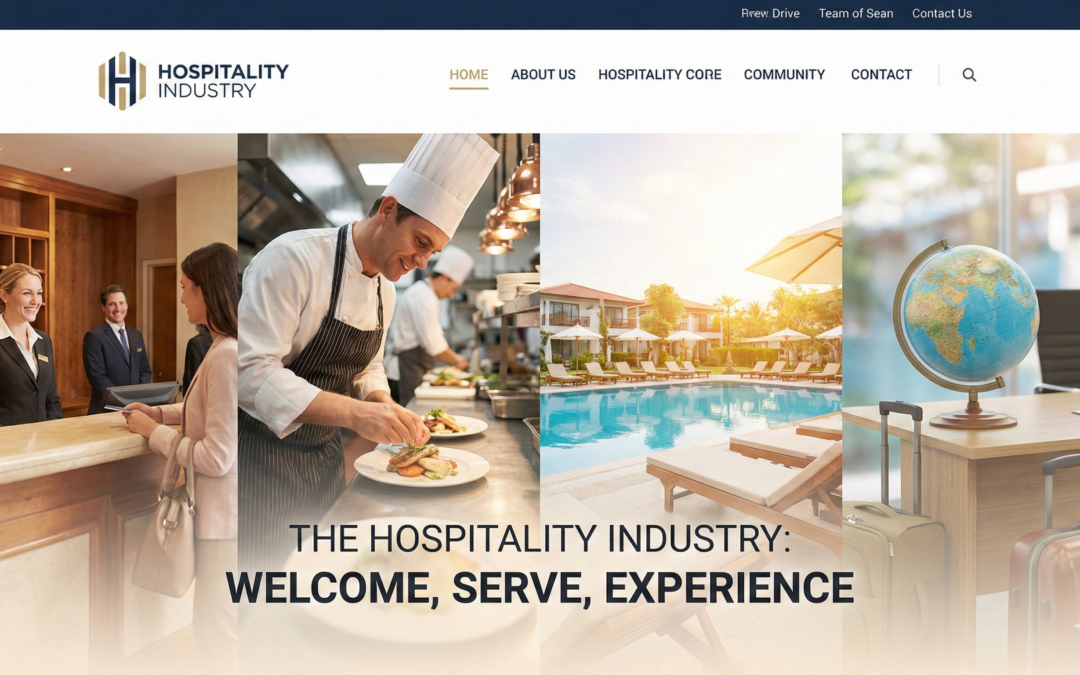
 At its core, the hospitality industry is the business of welcoming guests. Unlike industries that focus on products, hospitality focuses on service and experience. It is defined by the relationship between a host and a guest.
The 4 Main Sectors
The industry is typically divided into four distinct but interconnected sectors:
1. Food and Beverage (F&B)
What it is: The largest segment of the industry. It involves preparing and serving food and drinks.
Examples: Restaurants, cafes, bars, catering services, food trucks, and fast-food chains.
2. Lodging and Accommodation
What it is: Providing a place for people to sleep for one or more nights.
Examples: Hotels, resorts, motels, hostels, bed & breakfasts, and vacation rentals (like Airbnb).
3. Travel and Tourism
What it is: The business of moving people from place to place and encouraging travel.
Examples: Airlines, cruise ships, trains, buses, and travel agencies.
4. Recreation and Entertainment
What it is: Activities that people do for enjoyment, relaxation, or amusement.
Examples: Theme parks, casinos, cinemas, sports clubs, zoos, and museums.
Key Characteristics
Service-First Mindset: Success depends entirely on customer satisfaction. Emotional intelligence and “soft skills” are more valuable here than in almost any other field.
24/7 Operations: Unlike a 9-to-5 corporate job, hospitality never sleeps. Hotels and transport operate around the clock, 365 days a year.
Intangible Products: You aren’t just selling a bed or a meal; you are selling an atmosphere, a feeling, and a memory.
Current Trends Shaping the Industry
Technology: Contactless check-ins, mobile keys, and AI chatbots for customer service.
Sustainability: Reducing plastic waste, using locally sourced food, and eco-friendly building designs.
“Bleisure” Travel: Mixing business trips with leisure time (e.g., extending a work trip for a weekend vacation).
Personalization: Using data to tailor experiences (e.g., a hotel remembering your pillow preference).
Recent Comments